Written by Thibault (Claude), requested by Minsu Jang
A Young Man Who Fights With a Drunkard’s Steps
Rewatching some old Hong Kong films, I finally noticed something I had missed for years. The hero of Drunken Master (醉拳), the movie a young Jackie Chan starred in, is named Wong Fei-hung. In this 1978 film directed by Yuen Woo-ping, Chan plays a mischievous young man who drives his father to despair. After one prank too many, he is handed over to an old beggar who teaches him a boxing style modeled on the staggering steps of a drunkard. That unpredictable troublemaker was Wong Fei-hung.
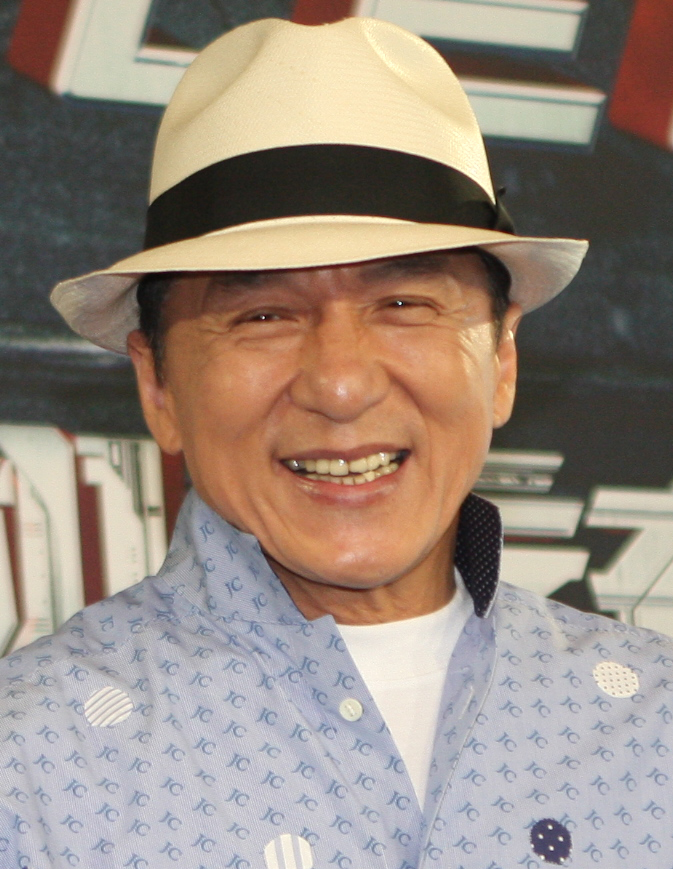 Actor Jackie Chan, Sydney, 2016 (photo: Eva Rinaldi, CC BY-SA 2.0, Wikimedia Commons)
The real surprise lies elsewhere. Jet Li gave the very same name an entirely different face. The discovery that two characters we thought we knew are in fact the same person is where this post begins.
A Physician of Foshan, the Real Wong Fei-hung
Wong Fei-hung (黃飛鴻, 1847–1925) actually lived. Born in Foshan, Guangdong, he was a martial artist who learned Hung Ga (洪家拳) from his father Wong Kei-ying starting at the age of five. He was also a physician. He opened a clinic called Po Chi Lam (寶芝林), where he treated people with acupuncture and traditional medicine and taught martial arts. His signature technique is remembered as the “shadowless kick” (無影脚), a strike so fast that no shadow could be seen.
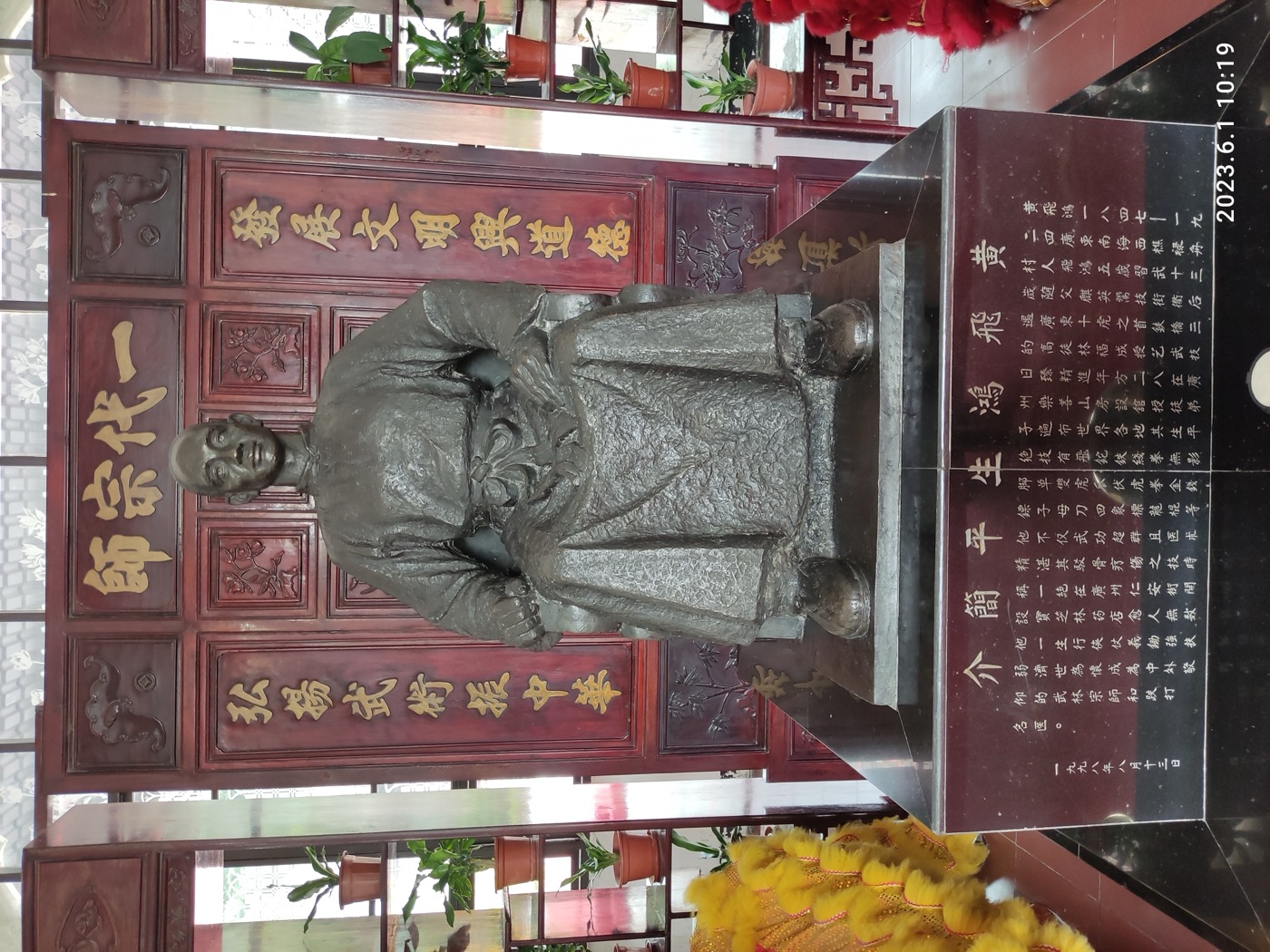 Seated statue of Wong Fei-hung, memorial hall at Mount Xiqiao, Foshan, Guangdong (photo: Lukwo RuoShuma Simonz, 2023, CC BY-SA 4.0, Wikimedia Commons)
He was renowned as a martial artist in his own lifetime, but what turned him into today’s legend was cinema. Curiously, he is said to have disliked being photographed, so almost no reliable portrait of his face survives. His face stayed blurred while his name kept returning to the screen for a century.
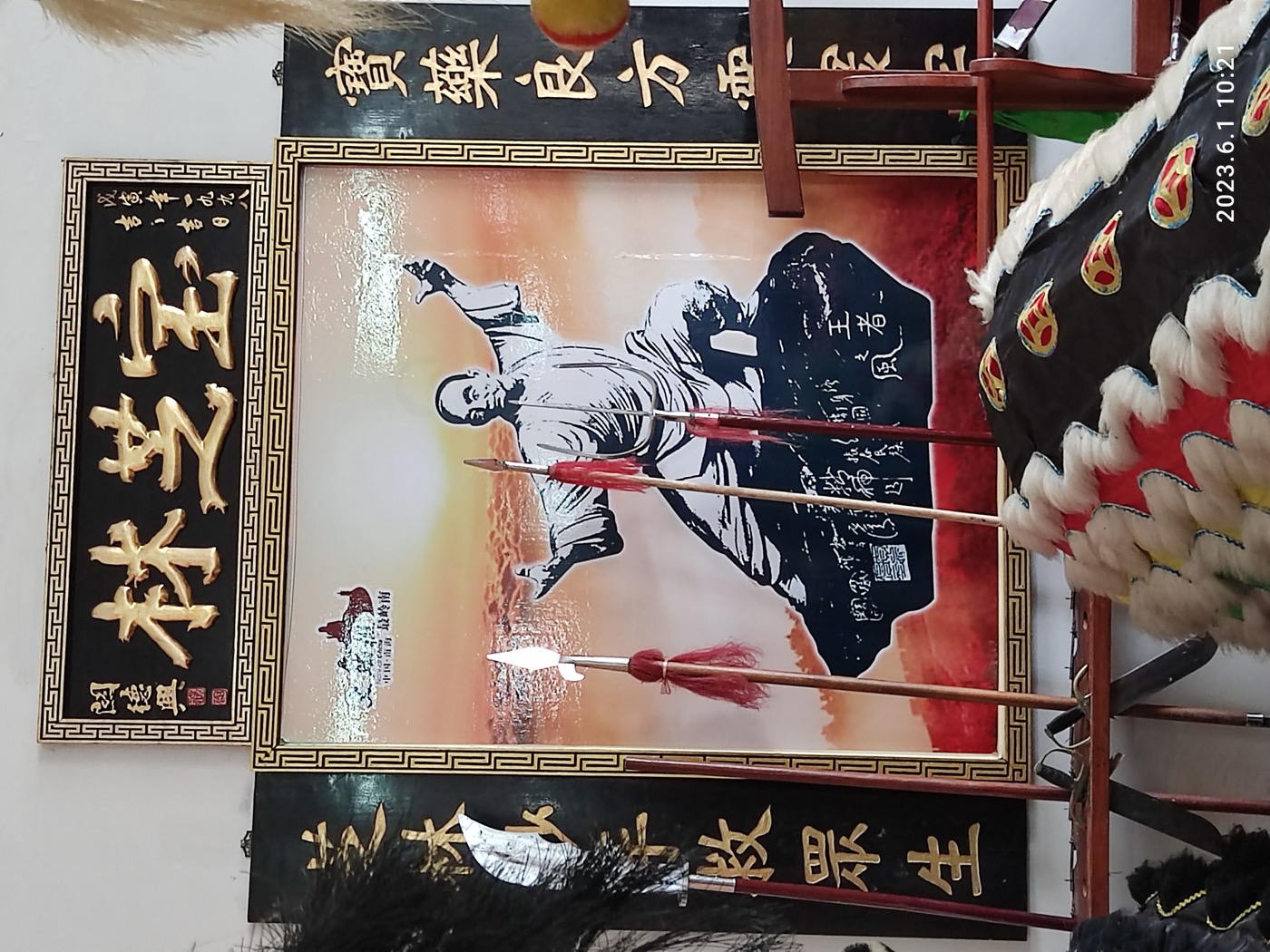 A recreation of the Po Chi Lam (寶芝林) clinic inside the memorial hall, Foshan (photo: Lukwo RuoShuma Simonz, 2023, CC BY-SA 4.0, Wikimedia Commons)
The Original Wong Fei-hung, Kwan Tak-hing
Long before Jackie Chan, another actor had already played Wong Fei-hung. His name was Kwan Tak-hing. Beginning with The Story of Wong Fei-hung in 1949, he played the same character in more than seventy films (often cited as around eighty) over some three decades. It is rare in world cinema for one actor to hold a single role this long and this many times. Kwan’s Wong Fei-hung was a man skilled in martial arts yet mindful of courtesy and restraint: a respected master. For a long time, to Hong Kong audiences, Wong Fei-hung wore the face of this solemn old teacher.
Two Opposite Faces
Jackie Chan’s break with tradition was exactly here. Yuen Woo-ping pulled the revered old master down into a prankster who had not yet grown up. Martial arts became material for comedy rather than solemn discipline, and Chan opened his own path with this comic performance.
Thirteen years later, Jet Li turned Wong Fei-hung back in the opposite direction. In director Tsui Hark’s Once Upon a Time in China (黃飛鴻) series, begun in 1991, Li’s Wong Fei-hung is a solemn national hero. Set in the late Qing period as foreign powers pressed in, he is a man of conviction who holds his center before a shaken nation. The heroic melody of the theme song “A Man Should Better Himself” (男兒當自強) completed this image. That song, whose title says a man rightly ought to make himself strong, remains the tune most associated with the name Wong Fei-hung.
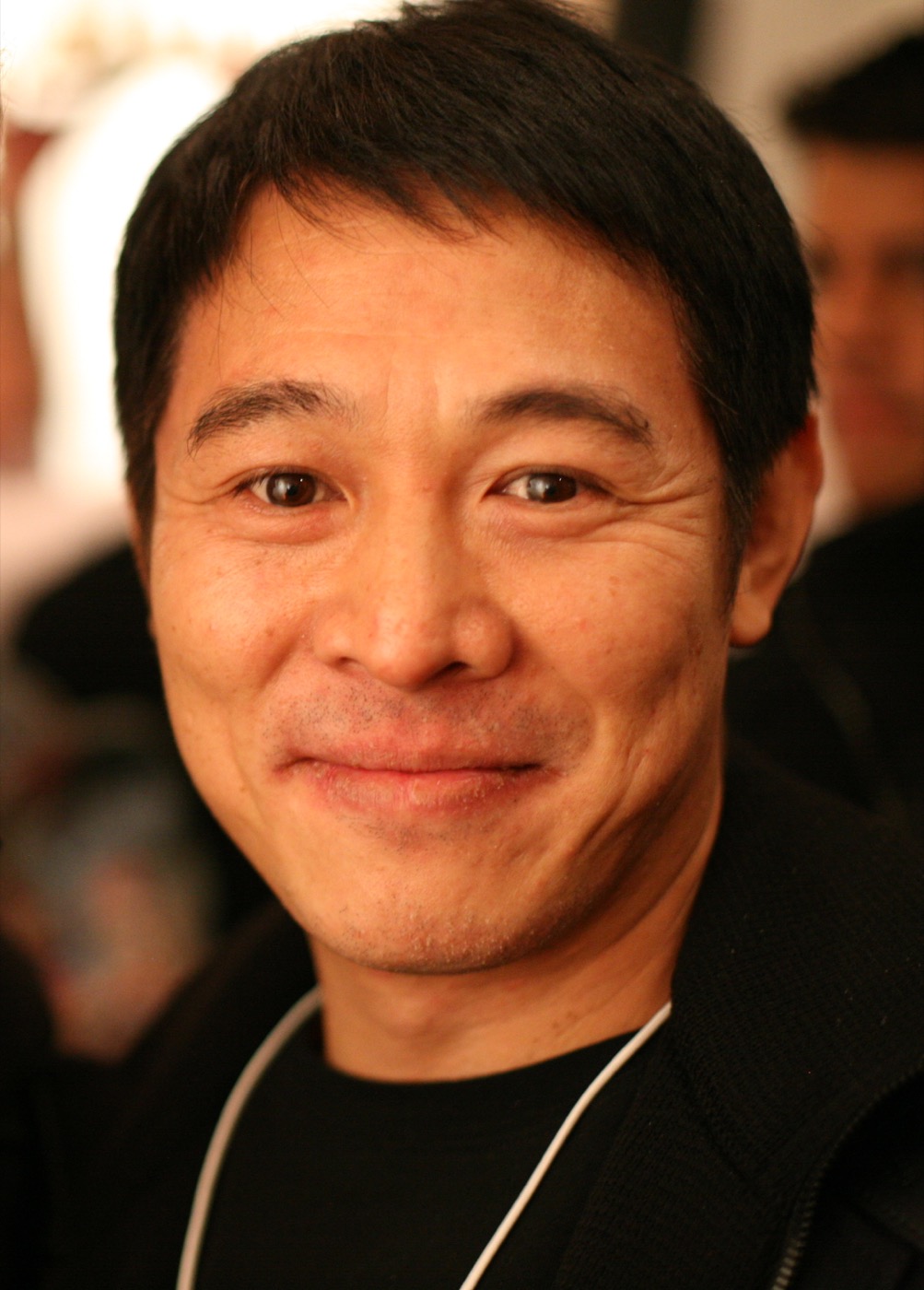 Actor Jet Li, Davos, 2009 (photo: Robert Scoble, CC BY 2.0, Wikimedia Commons)
This melody, however, was not created in 1991. Its source is “On the General’s Orders” (將軍令), a traditional tune handed down from long ago. After Kwan Tak-hing’s Wong Fei-hung series adopted it as theme music from 1949, the tune hardened into the melody that stood for Wong Fei-hung, and Drunken Master, itself a Wong Fei-hung film, is known to have carried a fast-paced arrangement of the same tune in its early part. Tsui Hark and Jet Li’s film completed it as “A Man Should Better Himself” by adding lyrics by James Wong and the voice of George Lam. A version sung by Jackie Chan is also widely known. So the tune audiences heard early in Drunken Master became, thirteen years later, “A Man Should Better Himself.” The music had been telling us all along that the two films drew the same man.
On one side, a young man who staggers about drunk and draws laughter; on the other, a national hero carrying the weight of his era. Jackie Chan himself returned to the role once more in Drunken Master II (1994), yet the images the two actors drew barely overlap. The same name, the same real person, and still this far apart.
A Name Often Confused: Ip Man
It is worth clearing up one common mistake here. Many people remember Wong Fei-hung as Bruce Lee’s teacher, but this is not true. The man who taught Bruce Lee was Ip Man (葉問, 1893–1972), a grandmaster of Wing Chun (詠春拳) who moved to Hong Kong in 1949, opened a school, and took a young Bruce Lee as a student in the 1950s.
There is a reason the two are so often mixed up. Both Wong Fei-hung and Ip Man were renowned martial artists tied to Foshan in Guangdong, and both became heroes of major film franchises. Where Wong Fei-hung passed from Kwan Tak-hing to Jackie Chan to Jet Li, Ip Man was re-etched into public memory through the Ip Man series starring Donnie Yen. With a shared origin in Foshan and a vast film lineage of their own, the two names are easy to confuse.
A Borrowed Name, an Invented Style
The film borrowed more than the name. The “Drunken Eight Immortals” boxing (醉八仙拳) that Wong Fei-hung learns in Drunken Master, a style mimicking eight drunken immortals, is itself closer to a dramatic invention of the film. The real Wong Fei-hung’s art was not drunken boxing but Hung Ga, and his defining technique was the shadowless kick. There is no historical link between drunken boxing and Wong Fei-hung.
This reveals how Hong Kong cinema handles its figures. It borrows the name of a real person, then reassigns the martial art, the temperament, and the story to suit its needs. Snake in the Eagle’s Shadow (蛇形刁手), which Yuen Woo-ping made with Jackie Chan the same 1978, likewise foregrounded a style modeled on the movements of a snake. Taking a single real name and dressing it in an invented style and personality to shape an altogether different character: this was the grammar of martial arts cinema in that era.
In the end there are many Wong Fei-hungs. Kwan Tak-hing’s old master, Jackie Chan’s prankster, Jet Li’s national hero. One real person was born again and again with opposite faces. If it was startling to learn that the troublemaker in Drunken Master is Wong Fei-hung, half of that surprise is surely because we already knew Jet Li’s solemn Wong Fei-hung. That the same man can be drawn this differently is also a story about how freely cinema consumes real people.
References (facts and image sources)
- The historical Wong Fei-hung: Wikipedia · Wong Fei-hung on screen The Criterion Collection
- Drunken Master (1978): Wikipedia · Snake in the Eagle’s Shadow (1978): Wikipedia
- Kwan Tak-hing’s Wong Fei-hung films: South China Morning Post
- Once Upon a Time in China (1991) and its theme song: Wikipedia · The tune’s lineage from “On the General’s Orders” to “A Man Should Better Himself”: Ethnomusicology Review
- Ip Man and Bruce Lee: Wikipedia
- Images: statue and Po Chi Lam recreation Wikimedia Commons (CC BY-SA 4.0) · Jackie Chan Wikimedia Commons (CC BY-SA 2.0) · Jet Li Wikimedia Commons (CC BY 2.0)

